
Spring in Cape Town brings longer days and renewed interest in outdoor movement. Trails that were quiet through winter suddenly fill with hikers, and weekend touch-rugby games reappear on local fields. For many people the first few sessions feel liberating until the knee begins to protest.
Swelling after a longer walk, a sense that the joint might give way on uneven ground, or sharp pain when descending stairs are frequent complaints once activity levels rise in October. A knee specialist in Cape Town sees this pattern every October.
The knee absorbs high loads during these pursuits. Cartilage that has been relatively protected through winter may face sudden increases in impact and twisting. The meniscus, the cartilage that cushions the joint, can be torn, or an old ligament injury that felt stable can become symptomatic again.
People who returned to sport without gradual build-up often notice the difference within days. The NHS cautions that knee pain can have many causes and that you should not self-diagnose, so a clear history of recent activity change is useful when you are examined.

Ignoring the warning signs can carry risk. Continuing to load a knee that locks, gives way or keeps swelling may risk further damage, and instability raises the chance of a fall on rocky trails or during a change of direction on the field. The NHS lists a knee that locks, gives way or painfully clicks as a reason to seek advice.
If you protect the joint for a long time the surrounding muscles may weaken, which can reduce control. What began as occasional discomfort can become ongoing swelling that makes planned spring events, from the kite festival to longer mountain outings, difficult. Where a meniscus tear needs treatment, the options depend on the type and location of the tear.
Effective orthopaedic care begins with a careful examination that helps to tell apart problems such as a meniscus injury, early arthritis and ligament injury. X-rays show the bones and joint alignment. The American Academy of Orthopaedic Surgeons describes MRI as the preferred way to diagnose an acute meniscus tear because it shows soft tissues in detail.
Many meniscus tears do not need immediate surgery, and non-surgical treatment can include rest, ice, compression, elevation, anti-inflammatory medicine and guided exercises. When symptoms persist, a steroid injection or a short arthroscopic (keyhole) procedure may be discussed, depending on the diagnosis. The goal is stable, confident movement rather than permanent restriction.
In practice this approach lets Capetonians return to spring trails and local sports with far less interruption than prolonged self-management. A knee specialist who understands both the local terrain and the demands of returning to activity guides the process so that recovery supports rather than interrupts the season.

Understanding what may be going on inside a painful knee
The knee has several structures that share the load, and the NHS notes that knee pain can be a symptom of many different conditions. The NHS lists some possible causes by pattern. Pain after overstretching, overusing or twisting, often during exercise, may be a sprain or strain. Pain between the kneecap and shin, often from repetitive running or jumping, may be tendonitis.
A knee that feels unstable, gives way when you try to stand, will not straighten, or made a popping sound during an injury may have a torn ligament, tendon or meniscus, or cartilage damage. Without an obvious injury, pain and stiffness in both knees with mild swelling, more common in older people, may be osteoarthritis.
The American Academy of Orthopaedic Surgeons describes the symptoms of a meniscus tear as pain, stiffness and swelling, with catching or locking of the knee. The NHS cautions not to self-diagnose and to see a doctor if you are worried, because different conditions can look alike.
Some signs need urgent advice. The NHS lists a knee that is very painful, that you cannot move or put weight on, that is badly swollen or has changed shape, that locks, gives way or painfully clicks (painless clicking is normal), or a very high temperature or feeling hot, cold or shivery with redness or heat around the knee, which can be a sign of infection, as reasons for urgent medical advice.
If any of these apply, contact a doctor or go to your nearest emergency unit. The NHS also lists swelling, warmth and pain in one leg, usually in the calf or thigh, as possible signs of a blood clot that needs prompt medical advice.
Looking after the knee in the meantime
The NHS advises that knee pain can often be treated at home and should start to feel better within a few days. It suggests putting as little weight as possible on the knee, for example avoiding long periods of standing, and using an ice pack or a bag of frozen peas wrapped in a tea towel for up to 20 minutes every 2 to 3 hours.
Paracetamol or ibuprofen gel or tablets can be used for pain. A pharmacist can advise if you have other conditions or take other medicines.
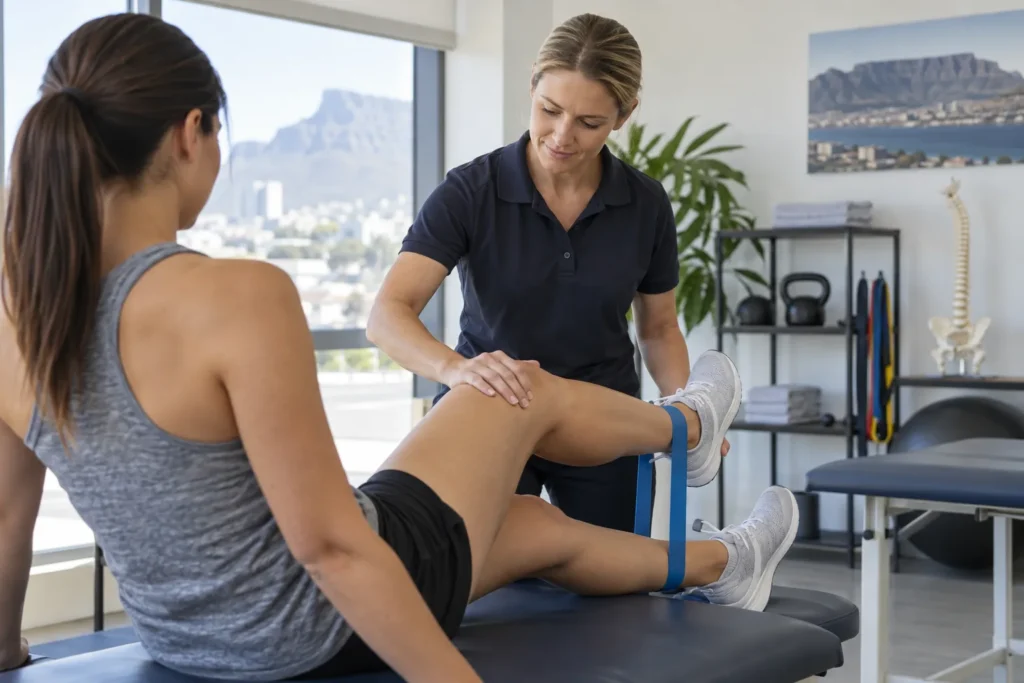
Seek help if the pain does not improve within a few weeks. Ask your doctor whether physiotherapy would help. If you are returning to trails or sport after a break, it is sensible to increase your activity gradually and to stop an activity that provokes swelling, locking or giving way until you have been assessed. A physiotherapist can advise on strengthening that suits your knee.
How a meniscus problem is usually managed
The American Academy of Orthopaedic Surgeons explains that an MRI is the preferred way to diagnose an acute meniscus tear because of its accuracy, as it shows soft tissues such as the menisci, cartilage and ligaments. Many meniscus tears do not need immediate surgery.
If symptoms do not persist and there is no locking or swelling of the knee, a doctor may recommend non-surgical treatment, which can include rest, ice, compression, elevation and anti-inflammatory medicine. A steroid injection may be offered to reduce pain and swelling.
Whether a tear can heal depends partly on where it is. The outer part of the meniscus has a good blood supply, and a tear there may heal on its own or can often be repaired with surgery.
The inner part lacks a significant blood supply, so symptomatic tears there that do not respond to conservative treatment are usually trimmed surgically. If symptoms persist despite non-surgical treatment, a doctor may suggest arthroscopic, or keyhole, surgery.
Surgery carries risks as well as benefits, and your specialist should explain both, along with what recovery would involve for you. This is why a proper assessment comes first.
Questions to bring to your appointment
Think about what you were doing when the pain started, whether there was a twist or a fall, and whether the knee swells, locks or gives way. Bring a list of your medication, because the NHS notes that bleeding into the joint is more likely in people taking anticoagulants. Write down which activities you want to return to, and ask what the likely cause is, whether a scan is needed and why, which non-surgical options are worth trying first and for how long, and what signs should prompt an earlier review.
Ask your physiotherapist or doctor which exercises are safe for your knee, rather than starting a programme on your own. Bring someone with you if that helps, and take notes, because there is often a lot to take in at one visit. If the answer is to try a period of physiotherapy first, ask how you will know whether it is working and when you should be reviewed again. A clear follow-up plan means you are not left wondering whether to keep waiting or to come back sooner.
Why a proper diagnosis matters for knee pain
Resting a sore knee for a few days is reasonable, but pain that keeps returning deserves a proper look. Different knee problems need different treatment, and exercises that help one condition can aggravate another. An accurate diagnosis lets your specialist and physiotherapist choose the right programme, set realistic timelines and avoid unnecessary procedures.
If your knee has been painful for more than a few weeks, keeps swelling, or gives way, book an assessment with a knee specialist. Early advice usually keeps more options open, and many knee problems improve with a well-guided non-operative plan. In Cape Town, your general practitioner or physiotherapist can help with referral. This article is general information and not a diagnosis, and individual results vary.
Frequently Asked Questions
Why does my knee hurt more once spring hiking starts?
Sudden increases in load and uneven terrain may stress cartilage and soft tissues that were relatively protected during quieter winter months. Pain after overstretching, overusing or twisting is a common pattern, but other causes exist, so see a doctor if you are worried.
When should I stop self-managing and see a knee specialist?
The NHS advises seeing a doctor if knee pain does not improve within a few weeks. Seek urgent advice if the knee is very painful, if you cannot move it or put weight on it, if it is badly swollen or has changed shape, or if it locks, gives way or painfully clicks.
Can orthopaedic care prevent the need for surgery?
Often, yes. The American Academy of Orthopaedic Surgeons notes that many meniscus tears do not need immediate surgery and may be managed without it. Whether surgery is needed depends on your diagnosis and how you respond to treatment.
Is it safe to continue light walking while waiting for an appointment?
For a sore knee the NHS suggests putting as little weight as possible on it, for example avoiding standing for long periods, and using an ice pack for up to 20 minutes every 2 to 3 hours. If you cannot put weight on the knee, or it locks or gives way, get urgent advice rather than walking on it.
How does a Cape Town knee specialist decide whether a scan or surgery is needed?
The decision rests on examination findings and on symptoms such as locking or swelling. An MRI is the preferred scan for an acute meniscus tear. Surgery is usually discussed when symptoms persist despite non-surgical treatment, and your specialist should explain the benefits and risks.
Related reading: Why Your Knee Keeps Giving Way: Causes, Risks, and When to See a Knee Specialist.